
Copper Strip for Electrical Transformer
What is transformer copper strip
Transformer copper strip is a key conductor material made from high-purity electrolytic copper and is primarily used in the manufacture of winding for various transformers. It possesses excellent electrical properties (high conductivity, low resistance, and low energy loss), stable mechanical properties (high tensile strength, fatigue resistance, and good weldability), high dimensional accuracy (controllable thickness and width tolerances), outstanding thermal stability, and strong compliance adaptability, making it a core consumable material for high-efficiency and energy-saving transformers.
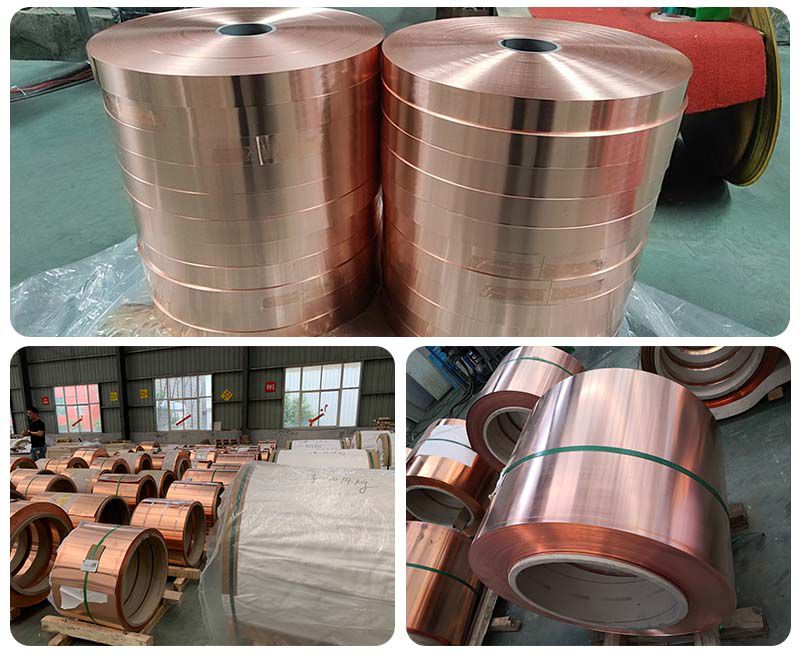
Specification of copper strip electrical
Alloy | Thickness(mm) | Width(mm) | Technique Standard |
T2 M | 0.5-2.0 | 100-1000 | GB/T18813-2014 |
Chemical composition
Size (MM) | Weight (KGS) | Cu | Pb | Fe | Bi | S | As | Sb |
1.2446*440 | 904.0 | 99.990 | 0.0010 | 0.0020 | <0.0003 | 0.0011 | <0.0003 | <0.0002 |
1.2446*500 | 977.0 | 99.990 | 0.0010 | 0.0023 | <0.0003 | 0.0009 | <0.0003 | <0.0002 |
1.2446*570 | 3044.0 | 99.990 | 0.0010 | 0.0023 | <0.0003 | 0.0009 | <0.0003 | <0.0002 |
0.7112*485 | 648.0 | 99.990 | 0.0009 | 0.0022 | <0.0003 | 0.001 | <0.0003 | <0.0002 |
Copper strip properties
Size (MM) | Weight (KGS) | Tensile Strength (Mpa) | Hardness (Hv) |
1.2446*440 | 904.0 | 235 | 57.0 |
1.2446*500 | 977.0 | 235 | 57.0 |
1.2446*570 | 3044.0 | 235 | 58.0 |
0.7112*485 | 648.0 | 231 | 55.0 |
Copper transformer strip uses
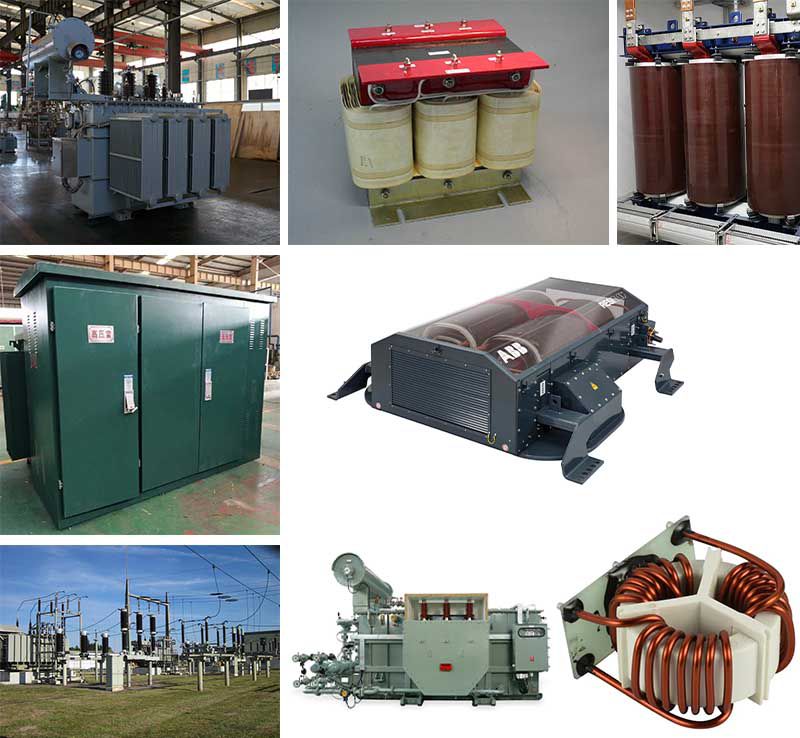
· Dry-type transformer
· Oil-immersed transformers
· Step-up station transformers
· Box-type substations
· On-board charger transformers for new energy vehicles
· Traction transformers for rail transit
· High-frequency transformers for UPS power supplies in data centers
· Metallurgical electric furnace transformers
· Toroidal transformers
Which one to choose: Copper strip VS Aluminum strip
Items | Copper Strip | Selection Tips | |
Grades | Pure Copper (Cu), mainstream grades TU0, TU1, TU2, C11000, etc., purity ≥99.9% | High-purity Aluminum and Aluminum Alloys, mainstream grades 1050, 1060, 1070, 1350, etc., purity ≥99.5% | Copper strips are suitable for high-precision applications; aluminum strips are prioritized for high-purity grades to ensure conductivity. |
Conductivity | Resistivity approximately 1.72 × 10⁻⁸ Ω·m, conductivity ≥ 100% IACS, low heat generation, low loss | Resistivity approximately 2.82 × 10⁻⁸ Ω·m (61% higher than copper), conductivity approximately 60% IACS, requires thicker wire diameter for compensation. | Under the same current, the cross-sectional area of aluminum strip needs to be about 1.6 times larger than that of copper strip to achieve the same conductivity. |
Mechanical Strength | Tensile strength ≥ 200MPa, Vickers hardness 50-75HV, strong short-circuit resistance (stress limit 1600kg/cm²) | Tensile strength lower than copper strip, weaker short-circuit resistance (stress limit 450kg/cm²), lower hardness, easy to process but easily deformed | Copper strip is preferred for high-load and high-impact applications; aluminum strip can meet basic requirements for ordinary load applications. |
Physical Properties | High density (approx. 8.9 g/cm³), compact size, less prone to oxidation, strong joint stability. | Low density (approx. 2.7 g/cm³, only 30% of copper), 5%-10% lighter, larger size, prone to oxidation. | Aluminum strip is more advantageous in scenarios where transportation and installation are inconvenient (e.g., mountainous areas, high altitudes). |
Service Life | 25-30 years, virtually maintenance-free, suitable for long-term stable operation. | Around 20 years, can be extended with proper maintenance, but prone to aging under long-term high-temperature operation. | For projects with a lifespan exceeding 20 years, copper strip offers better cost-effectiveness. |
Cost (Procurement + Maintenance) | Procurement costs are higher, 30%-50% higher than aluminum strip, but maintenance costs are lower and there are no additional loss costs. | Procurement costs are 30%-50% lower, with a significant advantage in USD pricing, but material loss due to thicker wire diameter needs to be considered, and oxidation issues need to be monitored during long-term maintenance. | For projects with limited budgets and short-term needs, aluminum strip is preferred; for long-term projects, copper strip has a lower total life-cycle cost. |
Packaging & Shipping
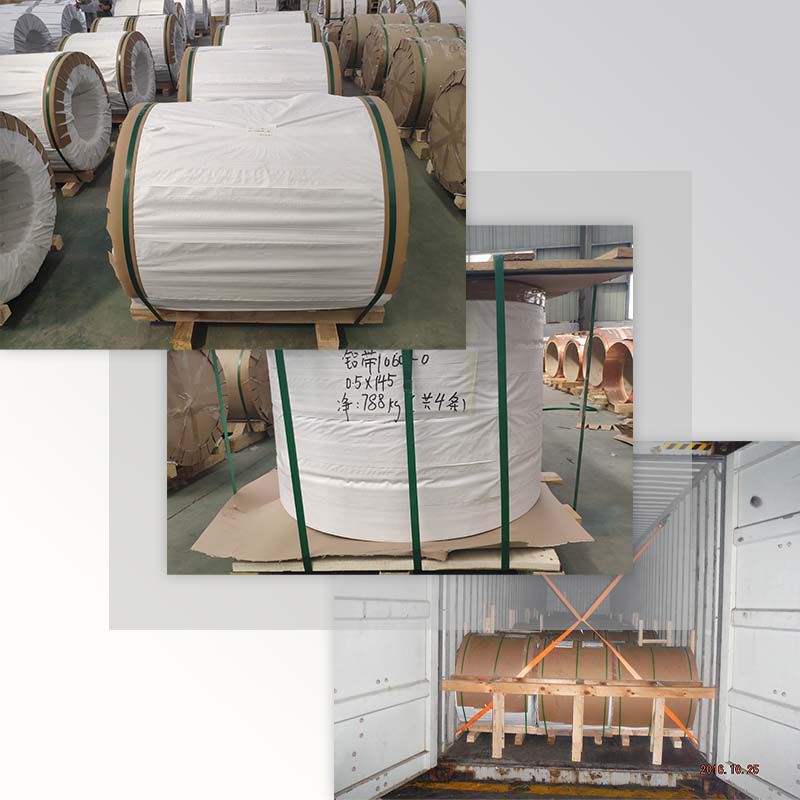
The packaging of exported transformer copper strip follows the principles of rust prevention, moisture prevention, and collision prevention, and is suitable for long-distance sea freight and international export standards. The outer packaging uses IPPC fumigation and heat treatment wooden pallets or wooden boxes, which are tied in a grid pattern with PET plastic steel straps/steel straps and wrapped with stretch wrap film. Waterproof labels with relevant information and English warnings must be affixed to the outside.
FAQ
1. What is the standard purity of copper transformer strip?
Most copper transformer strips are manufactured with high-purity copper, typically 99.9% or higher, depending on application and industry standards.
2. What are the common dimensions available?
Copper transformer strips are available in different:
Thicknesses
Widths
Edge types
Coil or straight length forms
Custom sizes are often available based on transformer design requirements.
3. What conductivity level should I expect?
High-quality copper transformer strips generally offer conductivity close to or above 100% IACS, depending on grade and processing.
4. What is the advantage of annealed copper strip?
Annealed copper strip provides:
Better bendability
Easier winding
Reduced cracking risk
Improved workability during transformer manufacturing.
5. Is copper transformer strip better than aluminum strip?
Copper is generally considered better when higher conductivity, compact design, and durability are required, but copper strip price is relatively high. Aluminum may be chosen for lower cost and lighter weight, but copper offers better performance in many transformer applications.
6. How do I choose the right copper transformer strip supplier?
Choose a supplier based on:
Product quality
Industry experience
Testing capability
Customization options
Certifications
Delivery reliability
Technical support
Competitive pricing
Original source: https://www.alcustrip.com/product/copper-strip-for-electrical-transformer.html
Qoute Now

Contact Us
- Aluminum Strip for Argon Arc Welding
- Copper Metal Strip for Cable Armor
- Finished Product Rewinding Cable Aluminum Strip
- 1070 Aluminum Alloy Strip
- Color Coated Aluminium Strip Roll for Cable Armor
- Aluminum Strip Coil for Cable Shielding
- Wholesale 1050 Aluminum Strip Transformer Winding
- Interlocking Armoured Cable Aluminum Alloy Strip
- 1060 Alloy Aluminum Strip for Transformer
- Copper Strip for Electrical Transformer
- 1350 Aluminum Strip for Transformer
- Aluminum Strip for Cable Armor