
Color Coated Aluminum Alloy Strip for Cable Protection and Identification
09.07.2026In sectors such as power, telecommunications, and industrial control cabling, the service life, operational stability, and maintenance efficiency of cables directly impact the project's safety rating and long-term operating costs.
With advancements in cable manufacturing technology, color-coated aluminum alloy strips have emerged as a core material for cable armoring and identification. Offering the dual advantages of integrated protection and labeling, they are widely used in applications ranging from power cables and fiber-optic communication cables to industrial control and subsea cables.
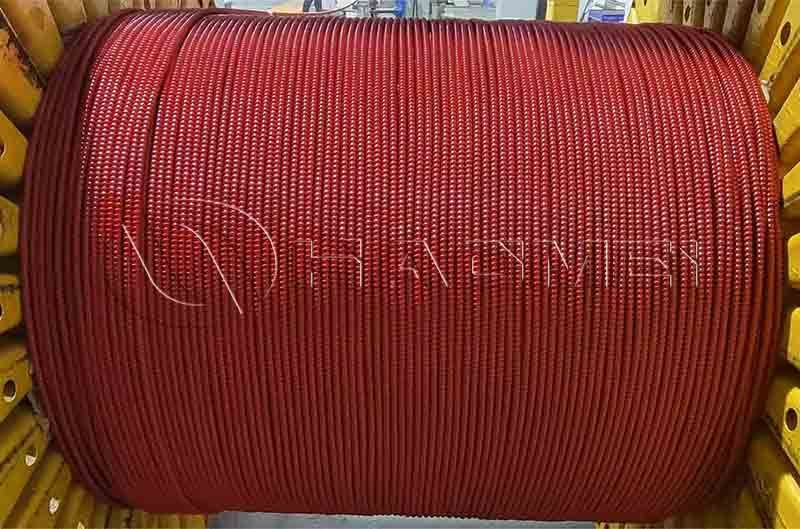
I. Color-Coated Aluminum Strips
1. Excellent Protective Performance
Compared to standard galvanized steel or bare aluminum strips, the color coated aluminum alloy strip offers superior protective capabilities. Firstly, the aluminum alloy substrate is lightweight yet tough, boasting excellent resistance to bending and stretching; it resists cracking or deformation during installation and bending, fitting snugly around the cable core to form a seamless protective layer that guards against damage from external crushing or abrasion.
Secondly, the high-performance colored surface coating works in tandem with the substrate's natural oxide layer to create a dual-layer anti-corrosion system. This effectively blocks external elements such as moisture, acids, alkalis, salt spray, and UV radiation, eliminating the common issues of rust, aging, and corrosion associated with traditional materials. This significantly extends the cable's service life, making it ideal for harsh environments—including overhead outdoor installations, underground burial, and highly corrosive coastal areas. Additionally, the material offers excellent electromagnetic shielding properties, effectively reducing external electromagnetic interference and ensuring stable power and signal transmission.
2. Color-Coded Visual Identification
This is the key feature distinguishing color-coated aluminum alloy strips from standard protective aluminum materials. Products can be customized in various standard colors—such as red, yellow, blue, green, black, and white—based on RAL color standards. Eliminating the need for secondary painting or labeling, the coating color itself allows for the immediate identification of critical information, including voltage ratings, functional types, installation zones, and circuit numbers.
Unlike traditional paper or plastic labels, this integrated coating-based identification is highly resistant to abrasion and sunlight; it will not peel or fade, thereby preventing issues such as labels becoming illegible or lost over time. In environments with high cable density—such as large-scale power grids, utility tunnels, and industrial parks—personnel can quickly distinguish cable types based on color. This greatly simplifies inspection, maintenance, and re-routing workflows, reduces the rate of operational errors, and enhances overall efficiency.
3. Convenient installation and suitability
Color-coated aluminum alloy strips feature a uniform, smooth surface coating with strong adhesion and excellent processability. They can undergo processes such as slitting, re-winding, wrapping, and welding, making them ideal for automated cable production lines. Material specifications can be flexibly customized to suit various cable diameters and armoring requirements. Additionally, their lightweight nature effectively reduces the cable's overall weight, thereby easing installation and lowering structural load requirements.
II. Re-wound aluminum alloy strips
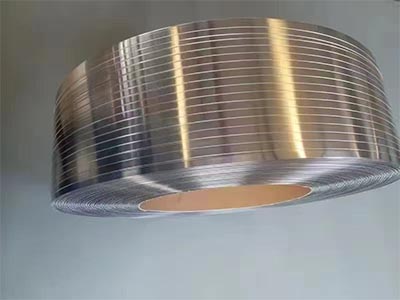
Rewinding cable aluminum alloy strips are a widely used fundamental protective material in cable protection systems, often paired with color-coated strips to suit different installation scenarios. Manufactured from high-purity aluminum alloy using precision rolling and leveling/re-winding processes, they feature a smooth surface, uniform thickness, and stable material properties. They are free of burrs and edge curling, offering excellent flexibility and conformability.
Re-wound aluminum alloy strips focus on providing basic mechanical protection and moisture-resistant shielding. Their primary function is to wrap the cable core, protecting it against mechanical abrasion and minor external compression while blocking moisture ingress. They also provide basic electromagnetic shielding, ensuring the cable's structural integrity and operational stability. Lacking a color coating, these strips prioritize practical protection over identification functions. They offer high cost-effectiveness and are commonly used for standard civil cables, conventional industrial control cables, and indoor installations where specific identification is not required and operating conditions are relatively mild.
In practical engineering applications, installers select materials based on the specific scenario: re-wound aluminum alloy strips are preferred for standard indoor cables and general power distribution lines to meet basic protection needs while controlling costs. Conversely, color-coated aluminum alloy strips are selected for outdoor, underground, and highly corrosive environments, as well as in areas with high cable density requiring categorized maintenance, thereby providing both protection and identification capabilities.
Original source: https://www.alcustrip.com/a/color-coated-aluminum-alloy-strip-for-cable-protection-and-identification.html
Qoute Now
Contact Us
- Copper Strip for Electrical Transformer
- 1060 Alloy Aluminum Strip for Transformer
- Wholesale 1050 Aluminum Strip Transformer Winding
- Aluminum Strip for Cable Armor
- Finished Product Rewinding Cable Aluminum Strip
- Aluminum Strip for Argon Arc Welding
- Color Coated Aluminium Strip Roll for Cable Armor
- Copper Metal Strip for Cable Armor
- 1350 Aluminum Strip for Transformer
- 1070 Aluminum Alloy Strip
- Interlocking Armoured Cable Aluminum Alloy Strip
- Aluminum Strip Coil for Cable Shielding