
Common Aluminum Grades Used for Cable Armoring
10.27.2026Cable armoring is an important part of modern power, control, communication, and instrumentation cable construction. Its main purpose is to provide mechanical protection against crushing, impact, abrasion, moisture exposure, rodents, and other environmental hazards. While steel has traditionally been used for heavy-duty armor, aluminum alloys are increasingly preferred in many applications because of their low weight, corrosion resistance, formability, and electrical properties.
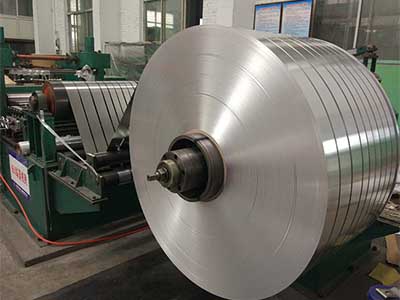
Among the aluminum alloys used in cable manufacturing, 5052, 5154, and 5154A are three common grades for producing aluminum armor tape for cable. These grades belong to the 5xxx aluminum alloy family, which is mainly alloyed with magnesium. This composition gives them a valuable balance of strength, ductility, corrosion resistance, and processability.
Why Aluminum Is Used for Cable Armor
Aluminum armor offers several advantages over conventional steel armor. Firstly, aluminum is significantly lighter than steel. This can reduce the overall cable weight, making transportation, installation, pulling, and handling easier—especially for long cable routes, overhead systems, offshore projects, and large industrial installations.
Secondly, aluminum naturally forms a dense oxide film on its surface. This protective layer provides good resistance to atmospheric corrosion and many humid or mildly corrosive environments. For applications where cable systems are exposed to moisture, coastal air, or industrial contaminants, aluminum-based armor can offer a durable protective solution.
Another advantage is electrical conductivity. In certain cable designs, aluminum armor can contribute to grounding or bonding performance. Depending on the cable standard and construction, the metallic sheath or armor layer may also help provide electromagnetic shielding and improve overall system safety.
However, not every aluminum alloy is suitable for armoring. The material must have enough strength to resist mechanical damage, while remaining flexible enough to be formed, corrugated, wrapped, or folded during cable production. That is why 5xxx series alloys are widely selected.
5052 Aluminum Alloy
5052 aluminum strip is one of the most recognized non-heat-treatable aluminum alloys. It contains magnesium as its primary alloying element, along with a small amount of chromium. The alloy is known for good corrosion resistance, moderate-to-high fatigue strength, and excellent formability.
For cable armor applications, 5052 is often chosen when manufacturers need a dependable combination of mechanical strength and processing performance. It can be rolled into thin strips or tapes with relatively stable properties, making it suitable for continuous cable manufacturing lines.
The corrosion resistance of 5052 aluminum is particularly useful in marine, coastal, and humid environments. Cables used in shipbuilding, port facilities, offshore equipment, water treatment plants, and outdoor infrastructure may benefit from this property. Compared with many standard aluminum grades, 5052 alloy generally performs well in salt-containing atmospheres.
In addition, 5052 aluminium can be supplied in several tempers, such as H32, H34, or H36, depending on the desired balance between hardness and flexibility. A softer temper may be preferred when the material needs to conform closely to the cable core, while a harder temper may be selected when higher resistance to deformation is required.
5154 Aluminum Alloy
5154 aluminum tape is another magnesium-containing alloy commonly used in demanding fabricated products. Compared with 5052, it generally has a higher magnesium content, which can provide increased strength while maintaining good corrosion resistance.
For cable manufacturers, 5154 alloy is often considered when the armor layer requires enhanced mechanical durability. It is especially suitable for applications involving greater physical stress during installation or service. For example, cables installed underground, in industrial plants, in transit systems, or in areas with potential mechanical impact may require a stronger protective metal layer.
The alloy also has good formability, although its processing behavior should be considered carefully based on temper, strip thickness, and bending requirements. Proper slitting quality is important because armor strips need clean edges and controlled dimensions to prevent defects during wrapping or corrugation.
5154 has strong resistance to atmospheric corrosion and can perform effectively in marine-related environments. This makes it a practical choice for cable producers serving energy, transportation, infrastructure, and offshore markets. Its higher strength level can help designers reduce material thickness in some constructions while still maintaining protective performance, although such decisions must always follow relevant cable standards and customer specifications.
5154A Aluminum Alloy
5154A is a modified version associated with the 5154 alloy family. It is used where manufacturers seek similar advantages in strength, corrosion resistance, and fabrication performance, while meeting particular regional, customer, or technical requirements.
In cable armoring, 5154A can be an effective material for applications that demand consistent strip quality and reliable mechanical properties. Like other 5xxx alloys, it is non-heat-treatable and derives much of its strength through solid-solution strengthening and strain hardening. This makes temper selection especially important.
The suitability of 5154A depends on the cable design. Factors such as strip thickness, width tolerance, coil weight, surface condition, elongation, tensile strength, and edge burr requirements should all be reviewed before production. A high-quality aluminium strip for cable armour should maintain uniform thickness and stable mechanical properties throughout the coil, helping cable manufacturers achieve efficient and reliable armor application.
5154A is particularly attractive in projects where corrosion resistance and moderate-to-high strength are both essential. It may be used in cables intended for harsh industrial surroundings, marine installations, heavy equipment, and outdoor electrical distribution systems.
Choosing the Right Grade
The best aluminum grade for cable armor depends on the intended application rather than on alloy name alone. 5052 is often selected for its excellent formability and corrosion resistance. 5154 may be preferred when higher strength is needed. 5154A can provide a suitable alternative for specialized specifications and demanding cable constructions.
In practice, cable producers should evaluate mechanical requirements, installation conditions, environmental exposure, forming methods, applicable standards, and customer preferences. Strip thickness, temper, surface finish, and dimensional tolerances are equally important to alloy selection.
By choosing the right grade—whether 5052, 5154, or 5154A—manufacturers can produce cable armor that delivers dependable protection, efficient processing, and long-term service performance.
Original source: https://www.alcustrip.com/a/common-aluminum-grades-used-for-cable-armoring.html
Qoute Now
Contact Us
- Interlocking Armoured Cable Aluminum Alloy Strip
- 1060 Alloy Aluminum Strip for Transformer
- Aluminum Strip for Argon Arc Welding
- Color Coated Aluminium Strip Roll for Cable Armor
- Aluminum Strip Coil for Cable Shielding
- Copper Strip for Electrical Transformer
- 1070 Aluminum Alloy Strip
- Wholesale 1050 Aluminum Strip Transformer Winding
- Copper Metal Strip for Cable Armor
- 1350 Aluminum Strip for Transformer
- Aluminum Strip for Cable Armor
- Finished Product Rewinding Cable Aluminum Strip