
Electrical Aluminum Strip for Oil-immersed distribution transformer
08.18.2026Oil-immersed distribution transformers are essential components of power distribution networks, renowned for reliable heat dissipation, strong overload capacity and long service life.
As the key conductive material for transformer winding, electrical grade aluminum strip directly governs equipment efficiency, mechanical stability and operational reliability. Unlike general aluminum strips, transformer-grade products require a precise balance of conductivity, mechanical strength, oil resistance and bending performance.
Among all influencing factors, alloy selection stands as the core determinant of winding performance and service lifespan. This article elaborates on mainstream aluminum alloys for oil-immersed transformers and standardized alloy selection criteria for engineering applications.
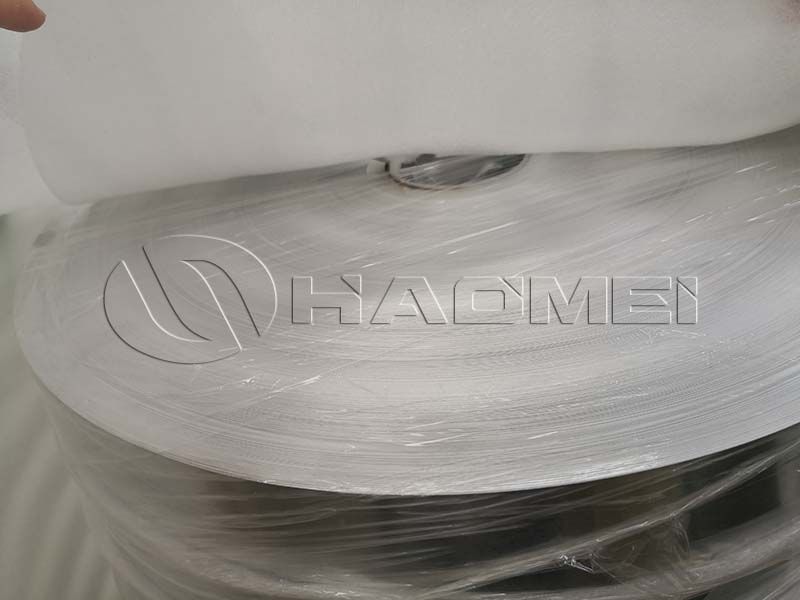
Why Alloy Selection Matters for Oil-Immersed Transformer Aluminum Strips
Oil-immersed transformers operate in rigorous long-term conditions: windings are continuously submerged in insulating oil, enduring cyclic temperature fluctuations, operational heat generation and occasional short-circuit mechanical shocks. Conventional aluminum materials fail to adapt to such harsh environments, and improper alloy selection will inevitably cause performance degradation and potential operational faults.
Alloy composition fundamentally defines two pivotal properties of aluminum strips: electrical conductivity and mechanical robustness. Higher aluminum purity reduces winding resistance and operational heat loss, while trace alloy elements enhance tensile strength and impact resistance.
Critically, transformer-specific alloys must deliver excellent chemical stability and insulating oil compatibility to resist aging and corrosion during lifelong oil immersion. Accurate alloy matching is therefore fundamental to stable, low-consumption and long-lifespan transformer operation.
Mainstream Aluminum Alloys
All electrical aluminum strips for oil-immersed distribution transformers belong to the 1000-series high-purity pure aluminum alloys. The most widely used grades are 1050, 1060, 1070 and 1350, each featuring distinct purity levels, conductivity and mechanical properties to suit different transformer power ratings and application scenarios.
1. 1060 Alloy: The Universal Choice for Conventional Oil-Immersed Transformers
With a minimum purity of 99.6%, 1060 aluminum alloy is the universal choice for 10kV–35kV conventional oil-immersed transformers. Its controlled trace iron content creates an optimal balance between electrical conductivity and mechanical performance.
Offering approximately 60% IACS conductivity, 1060 strip fully meets standard low-loss operational requirements. It exhibits superior tensile strength and bending flexibility compared with higher-purity 1070 and 1350 alloys, resisting winding deformation during manufacturing and short-circuit shocks during operation. Additionally, it features outstanding thermal stability and oil corrosion resistance with minimal aging under long-term high-temperature oil immersion. Its balanced performance and cost efficiency make it the standard alloy for most civil and industrial conventional oil-immersed transformers.
2. 1070 & 1350 Alloys: High-Conductivity Choice for Low-Loss Transformers
High-efficiency, ultra-low-loss oil-immersed transformers adopt 1070 and 1350 high-purity aluminum alloys. 1070 aluminum winding strip achieves 99.7% minimum purity, while 1350 alloy reaches 99.85% with ultra-low impurity content.
Both alloys deliver conductivity above 62.0% IACS, effectively cutting winding resistivity and reducing no-load and load losses, making them ideal for high-end energy-saving transformers in core power grids and data centers. The tradeoff is slightly lower mechanical strength due to reduced trace strengthening elements, requiring stricter tension control during winding. Their higher cost restricts their application to premium low-loss transformer models rather than conventional equipment.
3. 1050 Alloy: Cost-Effective Choice for Low-Power Transformers
1050 alloy (99.5% purity) is a cost-effective basic electrical aluminum grade. Though slightly less conductive than other 1000-series alloys, it offers good formability, weldability and corrosion resistance at a lower cost.
It is primarily applied to low-power (below 10kV) oil-immersed transformers with light load and low loss requirements, perfectly meeting the operational needs of small civil and industrial distribution equipment. However, its inferior conductivity and mechanical stability make it unsuitable for high-load continuous operation and frequent short-circuit impact scenarios.
Core Principles of Alloy Selection for Oil-Immersed Transformer Aluminum Strips
Transformer aluminum alloy selection depends on no absolute "best" option, only the most suitable one. Practical selection comprehensively considers transformer power rating, operating conditions, energy loss standards and manufacturing process requirements.
1. Match Alloy Conductivity with Transformer Loss Standards
Conventional low-power transformers with standard loss indicators prioritize cost-effective 1060 alloy for balanced performance. For national-standard energy-saving and ultra-low-loss transformers, high-purity 1070 or 1350 alloys are preferred to minimize winding loss and improve power transmission efficiency.
2. Balance Mechanical Properties with Winding Process Requirements
Transformer winding processes demand excellent bending and tensile resistance to adapt to compact winding and multi-angle bending. 1060 alloy with moderate strength suits thick, compact winding structures and avoids deformation. For thin-strip winding with low tension pressure, high-conductivity 1350 aluminium winding strip is optimal for prioritized electrical performance.
3. Adapt to Long-Term Oil-Immersed Operating Environment
Qualified transformer aluminum alloys must feature stable chemical properties and excellent compatibility with mineral insulating oil. All standardized 1000-series alloys pass strict oil-immersion aging tests without corrosion, precipitation or insulation failure. Low-purity aluminum with excessive impurities is prohibited, as it triggers oil deterioration and insulation damage under high-temperature oil immersion.
Conclusion
Alloy selection is the core of performance optimization for aluminum strips used in oil-immersed distribution transformers. Versatile 1060 alloy dominates conventional markets with balanced performance, while high-purity 1070/1350 alloys support high-end low-loss transformer upgrades, and cost-efficient 1050 alloy serves low-power ordinary equipment. Precise alloy matching based on transformer design parameters and operating scenarios maximizes equipment stability, energy-saving performance and service life, ensuring safe and efficient operation of power distribution systems.
Original source: https://www.alcustrip.com/a/electrical-aluminum-strip-for-oil-immersed-distribution-transformer.html
Qoute Now
Contact Us
- Copper Strip for Electrical Transformer
- 1060 Alloy Aluminum Strip for Transformer
- Wholesale 1050 Aluminum Strip Transformer Winding
- Aluminum Strip for Cable Armor
- Finished Product Rewinding Cable Aluminum Strip
- Aluminum Strip for Argon Arc Welding
- Color Coated Aluminium Strip Roll for Cable Armor
- Copper Metal Strip for Cable Armor
- 1350 Aluminum Strip for Transformer
- 1070 Aluminum Alloy Strip
- Interlocking Armoured Cable Aluminum Alloy Strip
- Aluminum Strip Coil for Cable Shielding