
How Grid Expansion and Renewable Energy Projects Drive Aluminum Strip Demand
11.03.2026Global electricity systems are changing rapidly. Rising power consumption, renewable energy integration, electric vehicle charging, and industrial electrification are pushing utilities to expand and modernize transmission and distribution networks. As these investments accelerate, demand for transformer components is growing—especially aluminum strip used in electrical windings.
Aluminum has become an increasingly important material in transformer manufacturing because it offers a practical balance of conductivity, weight, cost, and availability. For suppliers, manufacturers, and project developers, understanding this relationship is essential for planning procurement and managing material costs.
Grid Expansion Requires More Transformers
New power lines alone are not enough to strengthen an electrical grid. Every expansion project requires transformers to step voltage up for long-distance transmission and step it down for commercial, industrial, and residential use.
As cities grow and electricity demand rises, utilities need:
New substations and distribution transformers
Higher-capacity power transformers
Replacement units for aging infrastructure
Transformers for data centers, factories, and EV charging networks
Each transformer depends on carefully designed windings. While copper remains widely used, aluminum strip is a common alternative for many transformer designs, particularly where cost efficiency and lower weight are priorities.
The growth of grid infrastructure therefore creates a direct increase in demand for high-quality aluminum conductor materials.
Renewable Energy Adds New Pressure to the Grid
Wind and solar power projects are often located far from population centers. A solar farm may be built in a desert region, while an offshore wind project can be hundreds of kilometers from the nearest major city. Connecting these resources to consumers requires new transmission lines, substations, inverters, and transformers.
Unlike conventional power plants, renewable generation can be distributed across many locations. This means more connection points are needed throughout the grid. Each connection point may require transformers to regulate voltage and ensure reliable power delivery.
In addition, renewable energy output can fluctuate depending on weather conditions. Grid operators need stronger and more flexible systems to manage these variations. Transformer upgrades help support voltage control, energy storage connections, and reliable power transfer between regions.
As renewable capacity expands, transformer manufacturers must secure dependable supplies of winding materials, including aluminum strip.
Why Aluminum Strip Is Well Suited for Transformer Windings
Aluminum is valued for its relatively low density, good electrical conductivity, and competitive cost compared with copper. Although aluminum has lower conductivity than copper, engineers can compensate by using a larger cross-sectional area in the winding design.
For many transformer applications, aluminum offers several advantages:
Lower material cost: Aluminum can reduce conductor expenses, particularly in large-volume transformer production.
Lighter weight: Aluminum windings can help lower the overall weight of transformers, simplifying transportation and installation.
Good availability: Aluminum is widely produced globally, supporting stable supply options for manufacturers.
Recyclability: Aluminum is highly recyclable, aligning with the sustainability goals of renewable energy and grid modernization projects.
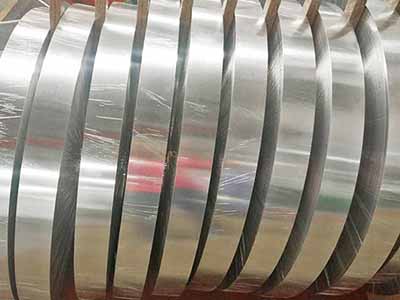
High-quality Aluminum Coil for Transformer Winding must meet strict requirements for thickness tolerance, edge condition, surface quality, conductivity, and insulation compatibility. Consistency is critical because defects can affect winding performance, energy efficiency, and transformer reliability.
Material Prices Influence Project Economics
Transformer manufacturers and grid contractors closely monitor raw material markets. Aluminum prices can be influenced by energy costs, mining output, industrial demand, trade policies, and currency movements. These changes affect manufacturing budgets and long-term project planning.
When evaluating aluminium strip for transformer price, buyers should look beyond the metal market quotation alone. Important factors include alloy grade, temper, dimensions, conductivity requirements, packaging, delivery terms, order volume, and processing quality.
A lower initial price may not always provide the best value if the material has poor edge quality, inconsistent thickness, or inadequate packaging. Such issues can increase scrap rates, slow winding operations, and create costly production delays.
Outlook for Aluminum Strip Demand
The long-term outlook remains positive. Governments and utilities worldwide are investing in grid resilience, electrification, and renewable energy capacity. Aging electrical infrastructure must also be upgraded to handle higher loads and more decentralized generation.
These trends will continue to support demand for transformers—and consequently for aluminum strip used in transformer windings. Suppliers that can provide reliable quality, technical support, flexible dimensions, and stable delivery schedules will be well positioned to serve this expanding market.
As the energy transition progresses, aluminum strip will remain a key material connecting renewable generation to the modern power grid.
Original source: https://www.alcustrip.com/a/how-grid-expansion-and-renewable-energy-projects-drive-aluminum-strip-demand.html
Qoute Now
Contact Us
- Copper Strip for Electrical Transformer
- Interlocking Armoured Cable Aluminum Alloy Strip
- Color Coated Aluminium Strip Roll for Cable Armor
- 1350 Aluminum Strip for Transformer
- Aluminum Strip Coil for Cable Shielding
- Copper Metal Strip for Cable Armor
- Wholesale 1050 Aluminum Strip Transformer Winding
- Finished Product Rewinding Cable Aluminum Strip
- Aluminum Strip for Argon Arc Welding
- 1070 Aluminum Alloy Strip
- 1060 Alloy Aluminum Strip for Transformer
- Aluminum Strip for Cable Armor