
The Importance of Elongation and Annealing in Aluminum Transformer Strip
09.21.2026As the core conductive substrate for transformer winding, the material properties of aluminum strip directly influence the winding process yield, equipment operational stability, and service life. While many focus on conductivity and thickness precision, they often overlook two critical, less visible indicators: elongation and the annealing process.
In reality, the flexible aluminum strips—achieved through precise annealing and meeting elongation standards—is key to resolving common issues such as cracking, deformation, and looseness during winding, and serves as a fundamental prerequisite for ensuring consistent quality in mass-produced transformers.
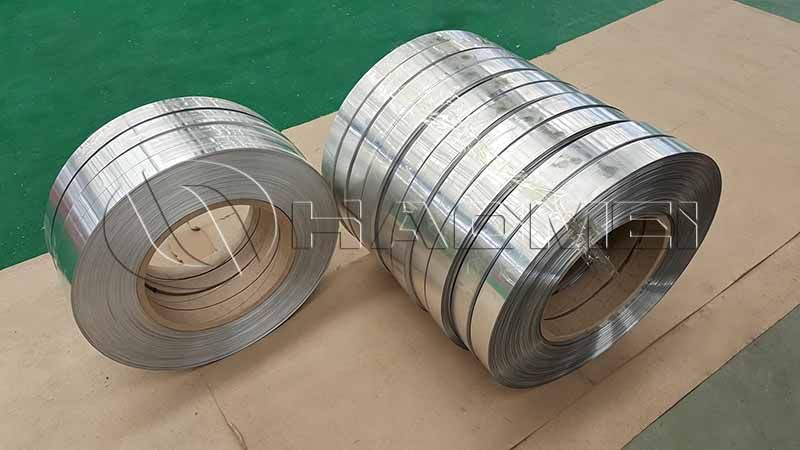
Initially, aluminum strip for transformers exists in a "hard" state resulting from mechanical processing like rolling and cold pressing; these processes cause internal grain compression and distortion, generating significant internal stress. In this state, the aluminium strip is hard, brittle, and possesses extremely poor elongation, making it highly prone to processing defects if used directly for winding.
Elongation is the primary parameter for measuring an aluminum strip's plastic deformation capacity—essentially, its ability to undergo stretching, bending, and wrapping without fracturing or cracking. This property is fundamental to meeting the requirements of precision transformer winding processes.
Transformer winding involves repeatedly bending, wrapping, and shaping the aluminum strip around the iron core; compact transformer designs, in particular, often require multiple layers to be tightly wound.
The annealing process is the essential method for optimizing elongation and improving the material's characteristics. Annealing involves heat-treating the rolled strip through a precisely controlled cycle of heating, holding, and cooling. At high temperatures, distorted internal grains reorganize and refine, fractured grain structures are restored, and mechanical internal stresses accumulated during rolling are fully released. By strictly controlling three key parameters—annealing temperature, holding time, and cooling rate—aluminum strip manufacturers can precisely adjust the strip's hardness, transforming it from a hard, brittle state into a pliable, uniform, and soft state.
The most immediate advantage of high-quality, properly soft annealed aluminum strip is its uniform, pliable texture, combined with significantly improved elongation and stable performance.
Aluminum strip with compliant elongation properties meets the plastic deformation requirements of transformer winding. During high-speed winding, tight bending, and multi-layer lamination, the material deforms uniformly in response to applied forces, avoiding localized stress concentrations.
Whether for small-radius precision winding or large-span, orderly wrapping, the strip conforms perfectly to the core profile, ensuring consistent shaping and fundamentally eliminating processing defects such as edge cracking, surface tearing, and bulging.
Beyond mitigating cracking risks and improving production yields, the precise matching of elongation properties with the annealing process comprehensively optimizes winding performance. On one hand, the soft, highly ductile strip is versatile, compatible with various fully automatic and semi-automatic winding systems; it resists jamming and edge curling during winding, thereby boosting production efficiency to meet large-scale manufacturing demands. On the other hand, uniform material characteristics facilitate tighter, flatter winding with consistent interlayer spacing, effectively reducing the likelihood of loosening or shifting and enhancing the overall structural stability of the transformer winding.
High-quality annealed aluminum strip also offers significant value regarding long-term equipment operation. Transformers undergo periodic temperature fluctuations and associated thermal expansion and contraction during service; aluminum strips with excellent elongation and toughness accommodate these minute thermal-cycle deformations without suffering from fatigue cracking or poor contact, thereby extending the transformer's service life and ensuring stable, long-term operation. Conversely, strips that are insufficiently annealed or lack adequate elongation not only present numerous processing defects but are also prone to cracking and delamination caused by thermal stress during operation, potentially leading to equipment failure.
It is important to note that the annealing process requires "moderate precision"—more annealing is not necessarily better. If the annealing temperature is too low or the holding time insufficient, internal stresses in the aluminum strip are not fully relieved; consequently, elongation remains limited and the material stays too hard, failing to resolve cracking issues.
Conversely, excessive annealing leads to grain coarsening, making the material too soft and reducing mechanical strength; this makes the strip prone to tensile deformation and uneven thickness during winding, thereby compromising winding precision and structural integrity. Only a standardized annealing process tailored to transformer winding requirements can achieve an optimal balance of hardness, elongation, and strength in the aluminum strip.
Original source: https://www.alcustrip.com/a/the-importance-of-elongation-and-annealing-in-aluminum-transformer-strip.html
Qoute Now
Contact Us
- Finished Product Rewinding Cable Aluminum Strip
- Aluminum Strip for Argon Arc Welding
- Wholesale 1050 Aluminum Strip Transformer Winding
- 1350 Aluminum Strip for Transformer
- Interlocking Armoured Cable Aluminum Alloy Strip
- 1060 Alloy Aluminum Strip for Transformer
- Color Coated Aluminium Strip Roll for Cable Armor
- 1070 Aluminum Alloy Strip
- Aluminum Strip Coil for Cable Shielding
- Copper Metal Strip for Cable Armor
- Copper Strip for Electrical Transformer
- Aluminum Strip for Cable Armor