
Aluminium Strip for Cables Armoring
09.21.2026Aluminium armor is widely used in power, control, and metal-clad cable designs because it provides mechanical protection at lower mass than copper-based alternatives. However, the most common processing concern is not alloy selection alone. It is edge quality.
A raised burr can score the cable bedding, damage polymer layers during interlocking, and create unstable forming conditions. For cable manufacturers, controlled burr height and smooth slit edges are therefore essential purchasing requirements for aluminium strip for cables armoring.
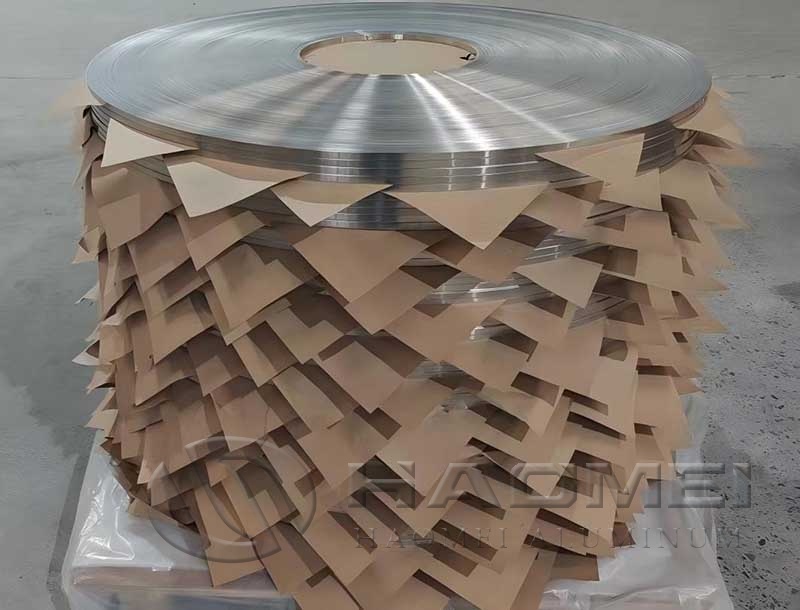
Why Burr Control Matters in Cable Armor Production
Interlocking armor is produced by forming narrow aluminum material around the cable core. The material passes through tooling under tension, then locks mechanically into a helical protective layer. Any uneven edge can concentrate force at the contact point between the armor and the underlying bedding.
A burr is a sharp or raised edge created during slitting. It can occur when knife clearance, tool wear, strip hardness, tension, or lubrication is poorly controlled. A visible burr is not always the only issue. A rolled edge, edge wave, or localized crack can also disrupt interlocking performance.
The practical risks include:
Damage to PVC, PE, XLPE, or other polymer bedding layers.
Inconsistent interlock engagement and poor armor appearance.
Tool wear or unplanned line stoppages.
Reduced flexibility at the finished-cable bend radius.
Increased risk of exposed sharp edges during installation.
There is no single universal burr-height limit for every armored cable. The acceptable value depends on material thickness, armor design, cable diameter, and forming equipment. A purchase specification should therefore define the inspection method, sample frequency, measurement direction, and agreed maximum edge condition rather than rely on visual statements such as "burr-free."
For applications requiring reliable forming, Aluminum Strip for Cable Armor should be specified with a slit edge suitable for the intended interlocking process, not merely a general-purpose cut edge.
Material, Dimensions, and Applicable Standards
Aluminum alloys used for cable armor are commonly selected for formability, corrosion behavior, and mechanical strength after forming. The chosen alloy and temper must match the cable design. A harder temper may improve dent resistance, but it can increase forming load and the risk of edge cracking. A softer temper generally forms more easily but may require tighter handling control.
The table below identifies the main items that should appear on a technical inquiry or purchase order.
| Requirement | Why It Matters | Recommended Verification |
|---|---|---|
| Alloy designation | Determines strength, formability, and chemical composition | Mill test certificate and applicable material standard |
| Temper | Affects interlocking behavior and springback | Certificate review plus forming trial where required |
| Thickness tolerance | Influences armor coverage, tooling setup, and finished diameter | Micrometer measurement across agreed positions |
| Width tolerance | Affects interlock geometry and overlap consistency | Caliper or optical measurement |
| Edge condition | Reduces bedding damage and tooling wear | Burr direction, burr limit, visual and tactile inspection |
| Surface condition | Prevents scratches, stains, oil excess, and handling defects | Agreed visual acceptance criteria |
| Winding quality | Supports stable pay-off at the armoring line | Check telescoping, loose turns, and package integrity |
ASTM B209/B209M covers aluminum and aluminum-alloy flat-rolled products and is often used as a reference for chemical composition, dimensions, and general requirements. It does not replace a cable manufacturer's own forming and edge-quality requirements.
For completed cable construction, IEC 60502-1 applies to extruded-insulation power cables and accessories for rated voltages from 1 kV to 3 kV. The standard addresses cable construction and testing requirements, but the exact armor design must still be confirmed against the applicable cable specification.
In North American projects, UL standards may apply depending on the cable type. UL 1569 covers metal-clad cables, while UL 4 addresses armored cable. Product marking and certification requirements must be verified against the project's cable category and the current edition of the relevant standard.
Aluminum armor should not automatically be treated as an earth-continuity conductor or electromagnetic shield. Its electrical function depends on the cable construction, bonding arrangement, governing standard, and installation code. Where fault-current performance or shielding is required, the cable designer must validate the complete system.
How to Specify and Inspect Aluminum Armor Material
A clear specification reduces disputes and prevents unsuitable material from reaching the armoring line. Start with the finished cable design, then translate its requirements into material controls.
Use the following specification framework:
State the intended use: interlocking armor, corrugated armor, screening, or another cable component.
Identify alloy and temper using the designation required by the cable design or customer standard.
Define nominal thickness and width, plus permissible tolerances.
State the preferred burr direction relative to the forming path.
Set acceptance criteria for sharp edges, edge cracks, camber, waviness, scratches, and surface contamination.
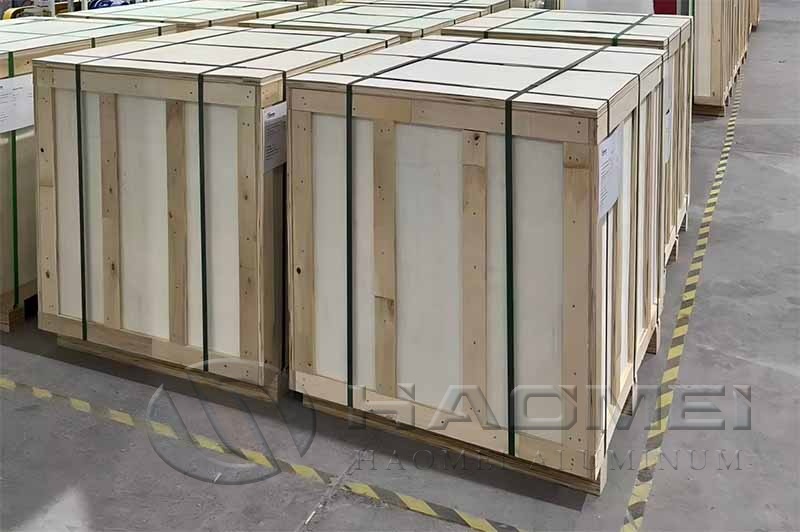
Define package weight, inside diameter, outside diameter, and pay-off direction to suit the armoring equipment.
Require a mill test certificate showing alloy, temper, dimensions, and lot traceability.
Conduct a trial on the actual interlocking line before approving a new source, alloy, or temper.
Edge inspection should combine visual inspection with measurement where a defined burr limit is specified. Inspect both edges because burr direction can differ. Material should also be checked after transport, since edge damage can occur from poor packaging or side impacts.
For corrosion-sensitive environments, evaluate the full cable system rather than aluminum alone. Moisture, chlorides, temperature cycling, dissimilar-metal contact, jacket damage, and installation conditions can affect long-term behavior. Proper outer-jacket integrity and compatible accessories are often as important as the armor material itself.
Release documentation should include the purchase order, material certificate, dimensional inspection record, edge-condition record, packaging inspection, and trial-forming result where required.
Original source: https://www.alcustrip.com/a/aluminium-strip-for-cables-armoring.html
Qoute Now
Contact Us
- Finished Product Rewinding Cable Aluminum Strip
- Aluminum Strip for Argon Arc Welding
- Wholesale 1050 Aluminum Strip Transformer Winding
- 1350 Aluminum Strip for Transformer
- Interlocking Armoured Cable Aluminum Alloy Strip
- 1060 Alloy Aluminum Strip for Transformer
- Color Coated Aluminium Strip Roll for Cable Armor
- 1070 Aluminum Alloy Strip
- Aluminum Strip Coil for Cable Shielding
- Copper Metal Strip for Cable Armor
- Copper Strip for Electrical Transformer
- Aluminum Strip for Cable Armor