
Aluminum Strip Applications in Electrical Power Systems
05.26.2026With its excellent electrical and thermal conductivity, high plasticity, low cost, and lightweight properties, aluminum strip has become a core basic material in the power industry. Its two main applications are in transformer winding fabrication and cable interlocking armor, spanning key aspects of power transmission and distribution, providing crucial support for the stable operation of the power grid.
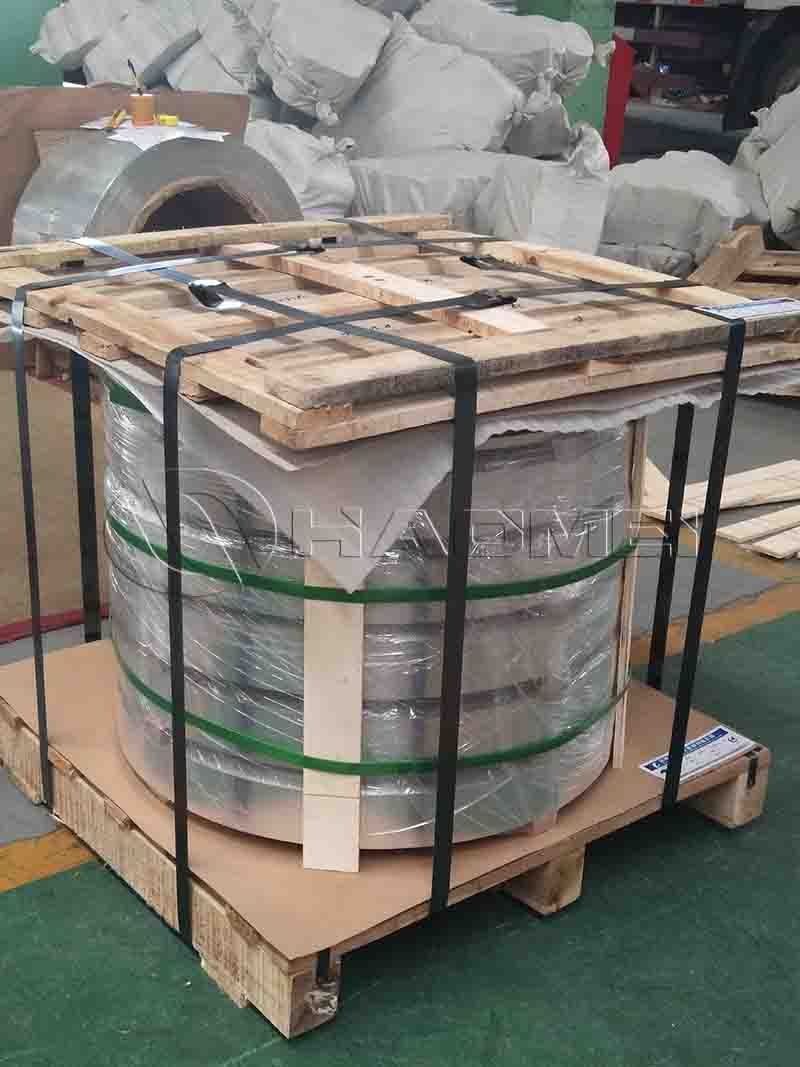
Core Characteristics
Power aluminum strip is primarily made from 1-series high-purity aluminum and 5-series aluminum alloys, processed through cold rolling and annealing. Its performance parameters are adapted to the harsh operating conditions of power equipment.
Currently, the most widely used type in the industry is 1060-O state aluminum strip, with a resistivity ≤0.028Ω·mm², exhibiting outstanding conductivity; its material is soft and has a smooth surface, meeting the requirements for precision winding, bending, and other deep processing.
Furthermore, this type of aluminum strip has a tensile strength in the range of 80-300MPa, an elongation exceeding 10%, and possesses multiple properties such as fatigue resistance, corrosion resistance, and non-magnetic properties.
Compared to traditional materials, its advantages are significant: its density is only one-third that of copper, reducing procurement and processing costs by approximately 40%; compared to steel strip, its non-magnetic properties completely avoid eddy current heating problems, reducing ineffective energy consumption in equipment, making it a superior alternative to copper and steel materials in the power sector.
Empowering Transformer Upgrades
Winding is the core components of transformers, directly determining equipment temperature rise, operating losses, and service life. Aluminum strip has now become the mainstream material for dry-type and oil-immersed distribution transformer winding. Previously, companies mostly used round aluminum wire for winding, resulting in large coil gaps, low fill factor, and easy heat accumulation, which accelerated insulation aging over long-term operation.
Replacing with flat aluminum strip results in a more compact winding structure, effectively improving coil fill factor, and ensuring uniform heat distribution, fundamentally solving the problem of localized overheating and extending equipment lifespan.
The 1060 and 1050 aluminum strip for transformer are suitable for various dry-type transformer high and low voltage winding processes. Under the same electrical performance conditions, aluminum strip winding transformers are more than 30% lighter than copper winding transformers, reducing transportation and installation difficulties, lowering production costs, and making them suitable for large-scale power distribution network construction.
Actual test data shows that high-purity aluminum strip winding transformers can achieve a thermal cycle life of up to 40 years under extreme operating conditions at 90℃, meeting the long-term operational needs of various scenarios including civil, industrial, and substation applications.
Innovating Transmission Cable Technology
Interlocking armoured cable aluminum strip is an upgraded technology in current cable manufacturing, widely used in various high and low voltage power cables, providing comprehensive protection for the cable. This technology abandons the traditional steel strip overlapping structure, adopting an S-shaped curved interlocking design.
The aluminum strip is processed into a concave-convex structure and spirally wrapped around the outside of the cable, with each part interlocking to form a seamless, integrated protective layer, solving common problems such as loosening, cracking, and rebound of traditional armor.
In practical applications, interlocking aluminum strip armor offers significant advantages:
Firstly, it has strong protective capabilities, with excellent resistance to lateral pressure and impact, making it suitable for direct burial and complex terrain laying scenarios, protecting the cable core and insulation layer, and reducing the failure rate.
Secondly, it has lower energy consumption and cost, relying on its non-magnetic and lightweight characteristics to eliminate eddy current losses, while reducing construction load and laying costs.
Thirdly, it has high safety adaptability, can withstand larger bending angles, is suitable for narrow construction spaces, and the aluminum alloy is flame-retardant and corrosion-resistant, resisting acid, alkali and humid environment corrosion, improving the safety of cable operation.
Original source: https://www.alcustrip.com/a/aluminum-strip-applications-in-electrical-power-systems.html
Qoute Now
Contact Us
- Copper Strip for Electrical Transformer
- 1060 Alloy Aluminum Strip for Transformer
- Wholesale 1050 Aluminum Strip Transformer Winding
- Aluminum Strip for Cable Armor
- Finished Product Rewinding Cable Aluminum Strip
- Aluminum Strip for Argon Arc Welding
- Color Coated Aluminium Strip Roll for Cable Armor
- Copper Metal Strip for Cable Armor
- 1350 Aluminum Strip for Transformer
- 1070 Aluminum Alloy Strip
- Interlocking Armoured Cable Aluminum Alloy Strip
- Aluminum Strip Coil for Cable Shielding