
Aluminium Strip for Cable Armor
05.20.2026In power transmission and communication cabling projects, the service life and operational stability of cables depend not only on the core quality of the insulation layer and conductor, but also heavily on the protective reinforcement of the armor layer.
As one of the core materials for cable armor, aluminium armour strip, with its comprehensive advantages of being non-magnetic, corrosion-resistant, lightweight, and easy to process, has become the preferred protective material for medium and high voltage power cables, direct-buried cables, and rail transit cables. Its application scenarios, replacing traditional steel tape, continue to expand, making it a key consumable for cable engineering safety protection.
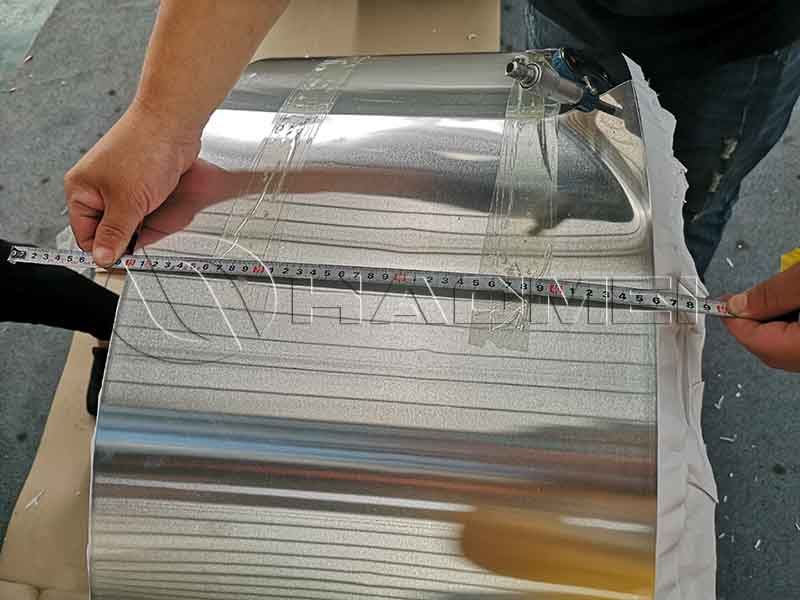
I. The Core Role of Cable Armored Aluminum Tape
Many people mistakenly believe that armored aluminum tape is only used for pressure resistance and damage prevention. In fact, it is a multi-functional protective layer integrating mechanical protection, electrical optimization, and environmental adaptability, providing comprehensive protection for cable operation safety.
Firstly, it provides mechanical protection. During direct burial, conduit installation, and outdoor erection, cables are highly susceptible to mechanical damage such as soil compression, gravel puncture, external force crushing, and construction dragging. Uniformly thick armored aluminum tape is tightly wrapped around the inner structure of the cable, effectively dispersing external pressure, resisting impact and wear, and preventing insulation damage and conductor exposure, thus physically eliminating leakage and short-circuit faults.
Secondly, it provides non-magnetic shielding, avoiding eddy current losses. This is the core advantage of aluminum tape armor over steel tape armor. Single-core medium- and high-voltage cables generate alternating magnetic fields during operation. Traditional steel tape, being a magnetic material, easily generates eddy currents and heat, increasing power loss, accelerating cable aging, and even posing safety hazards. Armored aluminum tape, being a non-magnetic metal, completely eliminates eddy current losses and possesses excellent low-frequency electromagnetic shielding capabilities, effectively isolating external electromagnetic interference, ensuring stable power transmission and accurate signal transmission, perfectly suited for high-voltage and ultra-high-voltage power cable scenarios.
Finally, it offers long-lasting corrosion resistance, adapting to complex operating conditions. In harsh conditions such as outdoor, underground, and humid/saline-alkali environments, moisture, acidic/alkaline soils, and corrosive gases can corrode the cable's outer layer. Aluminum tape forms a dense alumina protective film on its surface, possessing natural corrosion resistance. Compared to galvanized steel tape, it is less prone to rust and coating peeling, significantly improving cable weather resistance and extending its overall service life.
II. Mainstream Materials and National Standards
The aluminum tapes used for cable armor in the industry are not ordinary pure aluminum tapes; they are all made of specialized aluminum alloys, adapted to cable wrapping processes and long-term operational requirements.
Currently, the mainstream application is 5000 series aluminum alloy tape, with 5754 aluminum alloy tape being the most widely used. This type of material combines medium strength with high toughness, exhibiting excellent tensile and bending properties. It is less prone to cracking and warping during wrapping, making it suitable for high-speed armoring equipment production.
Furthermore, armored aluminum tapes must adhere to strict testing standards in terms of mechanical properties, bending performance, corrosion resistance, and electrical continuity. From raw material composition to finished product dimensions and performance, the entire process is controlled to ensure a perfect fit between the armor layer and the cable body, meeting the requirements for long-term safe operation of the project.
III. Aluminum Tape Armor vs. Steel Tape Armor
In cable armor selection, steel tape and aluminum tape are the two mainstream materials. Compared to traditional steel tape, aluminum tape's overall adaptability better meets the needs of modern high-end cable engineering.
Firstly, it is lighter and has lower construction costs. Aluminium strip for cable armor has a much lower density than steel. For the same specifications, aluminum tape armored cables are significantly lighter, effectively reducing the load on cable trays and towers, lowering the difficulty of transportation, handling, and laying, and improving construction efficiency.
Secondly, it is non-magnetic and lossless, energy-saving and safer. As mentioned earlier, steel tape armor is prone to eddy current heating, increasing energy consumption and posing safety hazards. The non-magnetic properties of aluminum tape completely avoid this problem, making it the ideal choice for single-core high-voltage cable armor.
Thirdly, it has stronger corrosion resistance and a longer service life. The galvanized layer of galvanized steel strip is easily worn away and peels off during production, transportation, and laying, making it highly susceptible to rust and corrosion. Aluminum strip, on the other hand, has a built-in passivation protective film, offering superior resistance to moisture, salt and alkali, and atmospheric corrosion, making it suitable for complex working conditions such as underground direct burial, coastal applications, and chemical plants.
Fourthly, it has better process adaptability. Aluminum strip has excellent toughness and high plasticity, bending without cracking and with high fit, making it suitable for various cable ring wrapping processes. It forms a neat shape, is less prone to edge curling and delamination, and the finished cable has better appearance and structural stability.
IV. Mainstream Application Scenarios
With its multiple advantages of lightweight, non-magnetic, corrosion resistance, and interference resistance, armored aluminum strip is widely used in various high-requirement cable products, with core scenarios covering several key areas:
1. Medium and High Voltage Power Cables: Relying on aluminum strip armor to eliminate eddy current losses and ensure stable high-voltage power transmission, it is commonly used in urban power grids and industrial power distribution projects, and can be directly buried without additional conduit protection.
2. Rail Transit Cables: Railway and subway signal cables and power supply cables, utilizing the excellent electromagnetic shielding properties of aluminum strip to resist electromagnetic interference from rail electromechanical equipment, ensuring accurate signal transmission and continuous, stable power supply.
3. Outdoor and Direct-Buried Cables: Municipal engineering, residential power distribution, and field wiring cables, designed to withstand complex environments such as soil compression, moisture corrosion, and outdoor exposure, providing long-term protection for the cable body.
4. Specialized Cables: Specialized cables for highly corrosive environments such as coastal areas, chemical plants, and wetlands, relying on the corrosion-resistant properties of aluminum strip to significantly reduce the probability of cable corrosion damage and lower subsequent maintenance costs.
V. Key Points for Selection and Use
High-quality armored aluminum tape is the foundation of cable quality. Three key points should be considered during selection and installation:
Aluminum strip should be made of dedicated armored aluminum alloy and avoid ordinary, mixed-grade aluminum tape.
The thickness uniformity and surface qualityhave a good control; the tape should be free of burrs, oxidation spots, and warping to prevent gaps and damage after wrapping.
Select the appropriate specifications for the operating conditions. For general civil and municipal engineering projects, use 0.5-0.8mm tape; for heavy-duty, deep-buried, and high-voltage applications, prioritize 1.0mm or thicker aluminum tape to ensure protective strength.
Original source: https://www.alcustrip.com/a/aluminium-strip-for-cable-armor.html
Qoute Now
Contact Us
- Copper Strip for Electrical Transformer
- 1060 Alloy Aluminum Strip for Transformer
- Wholesale 1050 Aluminum Strip Transformer Winding
- Aluminum Strip for Cable Armor
- Finished Product Rewinding Cable Aluminum Strip
- Aluminum Strip for Argon Arc Welding
- Color Coated Aluminium Strip Roll for Cable Armor
- Copper Metal Strip for Cable Armor
- 1350 Aluminum Strip for Transformer
- 1070 Aluminum Alloy Strip
- Interlocking Armoured Cable Aluminum Alloy Strip
- Aluminum Strip Coil for Cable Shielding